An Independent Editorial Resource

Understanding Physical Conditioning

A structured exploration of exercise methodologies, training principles, movement science, and the evolving concepts that shape our understanding of physical activity.

About This Resource

What Kinetos Presents

Kinetos is an independent editorial resource dedicated to the organized presentation of knowledge about physical conditioning and human movement. This site does not offer individual guidance, represent any service, or advocate for particular methods over others.

"The purpose here is clarity — to present what is known, how it developed, and the various frameworks through which physical activity has been understood and practiced across different contexts and eras."

The materials gathered here span historical perspectives, foundational physiological concepts, terminology, common points of confusion in public discourse, and a structured overview of training philosophies. Each section is intended to inform general understanding rather than direct specific behavior.

Kinetos approaches physical conditioning as an area of genuine intellectual interest: a field with a rich history, contested theories, and evolving scientific frameworks. The aim is to present this landscape in a way that is readable, accurate, and free from commercial intent.


Thematic Areas

Four Lenses for Understanding Physical Activity

Physical conditioning can be meaningfully examined through several distinct but overlapping frameworks, each offering a different depth of insight into how bodies move, adapt, and develop over time.

Athlete performing a controlled bodyweight movement on parallel bars in an outdoor urban setting, focused and deliberate posture suggesting structured practice

Framework One

Exercise Methodologies

An overview of how different schools of physical training have organized their approaches — from resistance-based systems to movement pattern disciplines and their underlying structural rationale.

Close-up of a human figure in motion captured in natural morning light, muscles visibly engaged in a running stride on a dirt path through open landscape

Framework Two

Physiological Responses

How the body responds to physical demands at a systemic level — including cardiovascular adaptation, musculoskeletal change, and the role of recovery in maintaining functional capacity over time.

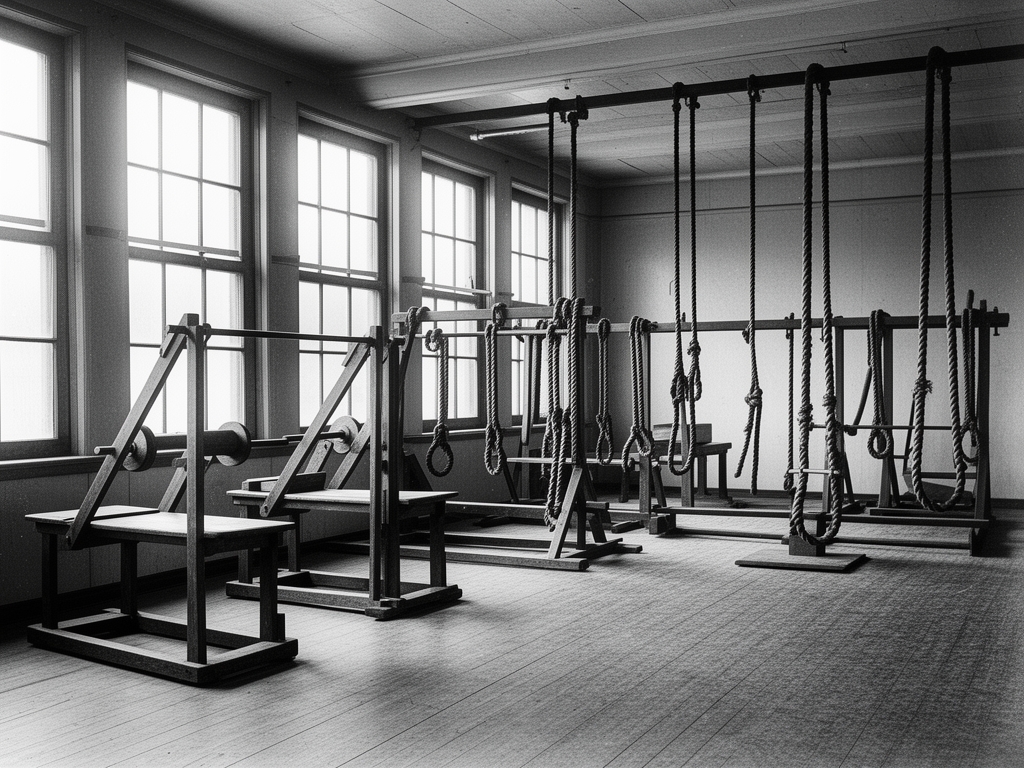
Vintage black-and-white photograph of a gymnasium with wooden exercise apparatus and ropes in early 20th century style, evoking the historical roots of physical training culture

Framework Three

Historical Perspectives

The evolution of physical training concepts from ancient civilizations to contemporary practice — examining how cultural, scientific, and social forces shaped the methodologies in use today.

Person sitting in still contemplation outdoors near a calm water surface during late afternoon light, representing the relationship between physical discipline and general well-being

Framework Four

Wellness and Routine

The relationship between structured physical activity, consistent habits, and general well-being — exploring how different communities and research traditions have approached this connection.

Common Points of Confusion

Frequently Misunderstood Aspects of Physical Training

Physical conditioning is a topic where popular assumptions often diverge from what structured analysis and accumulated research suggest. The following points aim to clarify some of the most persistent misunderstandings.

01

More effort does not always produce proportionally greater adaptation

A widespread assumption holds that training volume and intensity should continuously increase to produce ongoing physical change. In practice, the body's adaptive mechanisms are nonlinear; beyond certain thresholds, additional load without adequate recovery can plateau or reduce the rate of adaptation rather than accelerate it.

02

Cardiovascular and strength training are not opposing categories

These modalities are frequently presented as separate or conflicting disciplines. Contemporary exercise science views them as operating across a shared physiological spectrum, with most movement involving multiple energy systems simultaneously and many training methods producing overlapping adaptations depending on their structure and duration.

03

Consistency across time outweighs short-term intensity

Popular narratives often emphasize dramatic or intensive training blocks as the primary driver of physical change. Long-term data on physical adaptation consistently indicates that regular, sustainable engagement over extended periods is a more significant contributor to measurable change than any single high-intensity period.

04

Movement patterns matter more than isolated muscle focus

Much popular fitness content frames exercise in terms of targeting specific muscle groups. Biomechanical analysis and functional movement research increasingly focus on multi-joint movement patterns — such as pushing, pulling, hinging, and rotating — as more relevant units for understanding how physical capacity develops and is maintained.

05

Rest and inactivity are not equivalent concepts

The role of rest in physical conditioning is frequently underestimated or conflated with inactivity. Structured recovery periods are physiologically distinct from sedentary behavior; they are understood in exercise science as a component of the training process itself, during which many of the adaptive responses to physical stress actually occur.

06

Individual variation significantly affects training response

Prescriptive training frameworks often present a single model as universally applicable. Research in exercise science consistently identifies substantial variation in adaptive responses between individuals, influenced by factors including baseline conditioning, movement history, sleep quality, and overall lifestyle context. This variation is not an exception — it is the norm.

Historical Context

The Evolution of Physical Training Thought

Understanding how training methodologies developed over time provides important context for the systems in use today. Each era built upon, reacted against, or reinterpreted what came before.

Classical Antiquity

Athletic Preparation in Ancient Greece and Rome

In ancient Greece, structured physical preparation was integral to civic and military life. The gymnasium served not only as a venue for physical development but as a center for broader intellectual exchange. Greek athletic tradition emphasized harmonious physical proportion and the concept of areté — excellence through disciplined effort. Roman military culture adapted these principles into systematic conditioning frameworks organized around endurance, strength, and functional readiness for sustained physical demands.

Ancient stone athletic arena with tiered seating and weathered columns under clear blue sky, evoking the classical world of organized physical competition and civic athletic culture
18th – 19th Century

The Emergence of Systematic Physical Education

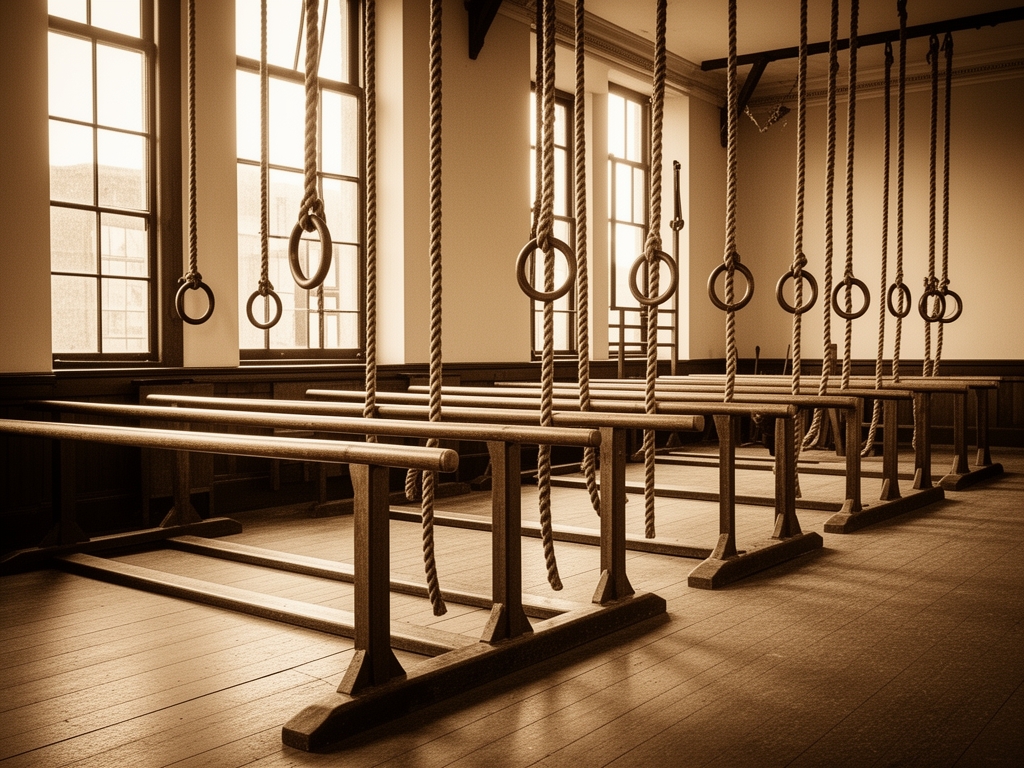
The late 18th and 19th centuries saw the formalization of physical education as a structured discipline, distinct from military training or athletic competition. Influential European frameworks — particularly from German, Swedish, and later British traditions — proposed systematic approaches to body movement as a matter of public utility and individual development. These systems introduced progressions, standardized exercises, and concepts of load management that would become foundational to modern training theory.

Victorian-era gymnasium interior with wooden parallel bars, climbing ropes, and iron ring apparatus arranged in rows, photographed in warm sepia tones depicting organized physical education
Early 20th Century

Scientific Interest in Human Performance

The early decades of the 20th century brought a new level of scientific inquiry to physical conditioning. Exercise physiology emerged as a formal discipline, with researchers applying laboratory methods to questions of oxygen consumption, muscular fatigue, and cardiac output. This period established many of the measurement frameworks still used today, while also seeing the growth of organized sport and recreational fitness as social phenomena distinct from either military preparation or competitive athletics.

Black-and-white photograph of an early 20th century laboratory setting with measurement instruments and a researcher observing physical performance data, representing the scientific study of human movement
Late 20th Century – Present

Pluralism and Diversification of Training Approaches

The latter half of the 20th century saw an unprecedented diversification of training philosophies and modalities, from structured resistance programs to movement-based practices rooted in martial arts, dance, and Eastern physical traditions. The rise of personal training as a profession, along with mass-market fitness media, introduced a complex landscape of competing methodologies. Contemporary exercise science attempts to evaluate these approaches through controlled research, while practitioners continue to draw from eclectic combinations of established and emerging systems.

Modern open-plan fitness facility with diverse equipment including cable machines, open floor space, and natural light from large windows, representing the pluralism of contemporary physical conditioning approaches
Contemporary Understanding

Movement Science and Integrated Frameworks

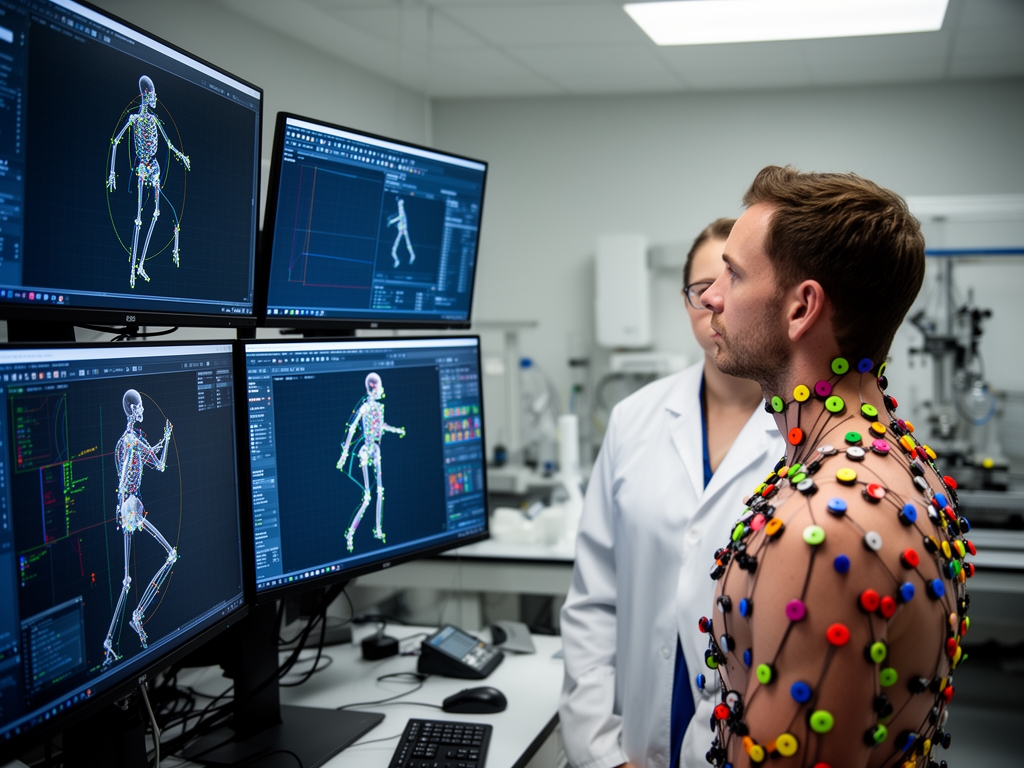
Current understanding of physical conditioning draws from biomechanics, sports science, motor learning research, and an expanding body of longitudinal population studies. The dominant conceptual shift has been away from isolated metric optimization — lifting heavier, running faster — toward broader frameworks of movement quality, long-term participation, and the relationship between physical activity and overall functional capacity across the human lifespan. These perspectives continue to evolve as research methods improve and more diverse populations are studied.

Researcher in a biomechanics laboratory observing motion-capture data displayed on large monitors, with reflective markers visible on a study participant, representing modern scientific analysis of human movement

Core Terminology

Fundamental Concepts Explained

A structured reference for key terms and concepts that appear regularly in discussions of physical conditioning, presented in their general educational context.

Progressive Overload

The principle that the body adapts to a given physical stimulus over time, requiring gradual increases in the demands placed upon it to continue producing adaptation. This applies across different forms of training and does not refer exclusively to lifting heavier loads — it encompasses volume, density, complexity, and range of movement as potential variables for progression.

Specificity (SAID Principle)

Specific Adaptation to Imposed Demands — the observation that the body adapts in ways that closely reflect the type of stress applied to it. A runner develops cardiovascular and muscular adaptations relevant to running; a climber develops grip strength and spatial body awareness specific to climbing. Generalized activity produces generalized adaptation; targeted training produces targeted outcomes.

Energy Systems

Human movement is powered by three primary energy pathways: the phosphagen system (high-power, very short duration), the glycolytic system (moderate power, short to medium duration), and the oxidative system (lower power, sustained duration). These systems operate simultaneously rather than sequentially, with the relative contribution of each shifting based on the intensity and duration of the activity.

Recovery and Supercompensation

Following a training stimulus, the body enters a period of restoration during which it returns to baseline and, in many models, temporarily exceeds its previous capacity — a phenomenon referred to as supercompensation. The timing and magnitude of this response vary considerably between individuals and are influenced by the nature of the preceding stimulus, sleep, nutrition patterns, and overall stress load.

Motor Patterns and Skill Acquisition

Physical conditioning involves not only physiological adaptation but also the development and refinement of movement patterns through the nervous system. Motor learning theory describes how complex movements are initially executed with high cognitive demand and become progressively more automatic through repetition. This neurological dimension of training has significant implications for how movement quality is developed and maintained over time.

Periodization

A framework for organizing training over defined time periods — typically ranging from weeks to months — to manage the balance between accumulated stress and recovery. Periodization models vary widely in their structure, from simple linear progressions to more complex undulating or block-based arrangements, reflecting different theories about how adaptation is best managed across longer training timelines.

Detraining

The partial or complete reversal of training-induced adaptations that occurs when a training stimulus is reduced or removed. The rate and extent of detraining vary by the type of adaptation, training history, and the degree of reduction in activity. Cardiovascular adaptations tend to diminish more rapidly than neuromuscular ones, and individuals with longer training histories generally retain adaptations longer than those newer to structured activity.

Common Questions

Frequently Asked Questions

What does Kinetos present, and what is it not?

Kinetos is an independent informational resource presenting structured knowledge about physical conditioning principles, training history, exercise concepts, and movement science. It does not offer individual plans, represent any commercial service, or advocate for specific products or methods. The content is educational and descriptive in nature.

Are the concepts presented here drawn from a single school of thought?

No. Kinetos intentionally presents information across multiple frameworks and traditions within exercise science and physical culture. Where perspectives differ or remain contested, this is noted. The aim is to reflect the actual landscape of thought in this field, not to promote a single methodology.

How is the content on this site organized?

Content is organized thematically and structured to allow both sequential reading and non-linear exploration. Key sections address training methodologies, physiological concepts, historical context, and foundational terminology. Each section is self-contained while connecting to broader themes explored across the site.

Can I submit a question or point of inquiry?

General correspondence is welcome through the contact page. Kinetos does not offer individualized responses or specific assessments, but general questions about the resource, its editorial approach, or its content scope can be directed to the contact address listed on the contact page.

Further Reading

Want to understand the editorial approach?

The About page describes how Kinetos organizes its content, the principles that guide its editorial stance, and what this resource is — and is not — intended to be.

Learn More About Kinetos

General Correspondence

Reach Kinetos

[email protected]

Jalan Merdeka 10, Jakarta Pusat, DKI Jakarta, Indonesia

Go to Contacts

Continue Exploring

Physical Conditioning as a Field of Inquiry

The concepts presented here form only part of a much larger body of knowledge. Kinetos continues to organize and present this material as a reference for those seeking structured, context-aware understanding of physical activity and movement.

Read Further View Materials